
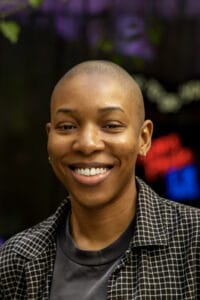
Written by Shar Jossell
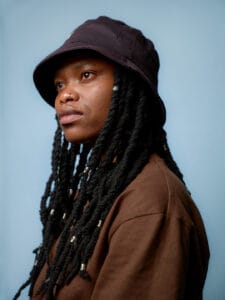
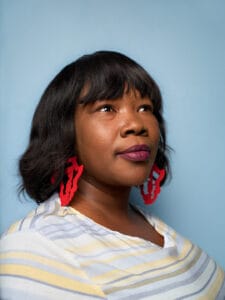
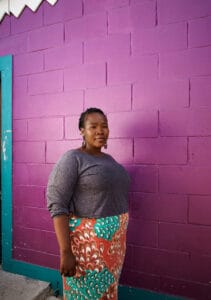
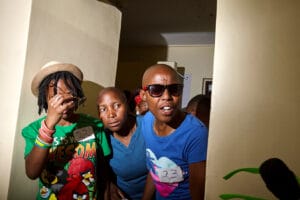
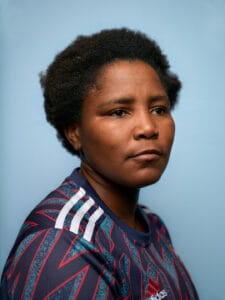
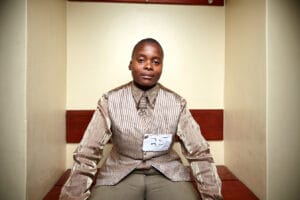
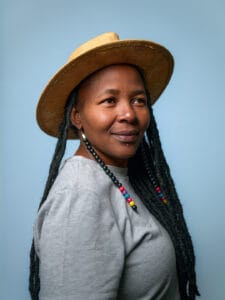
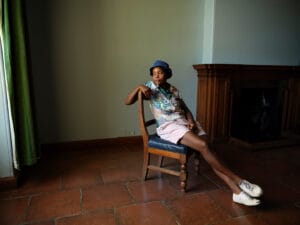
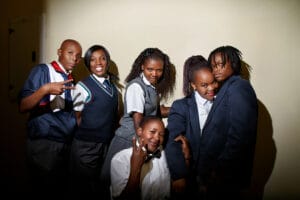
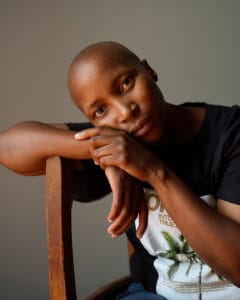
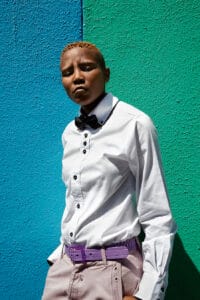
A Brooklyn-based photographer and member of GLAAD’s 2026 EMEI cohort, Ruhamaiah trains her lens on the quiet, complicated terrain of Black lesbianism and what it reveals about womanhood as a social construct.
Her path to photography was indirect. Trained in journalism and video editing, she picked up a camera almost incidentally, drawn by the same thing that drew her to film and television: narrative. “What I like about video is how narrative can unfold over time. With photography, I became interested in figuring out how to create that same sense through still images,” she says. Shooting on film, she has built a long-form body of work exploring Black women, particularly studs and masculine-presenting women, as a community that complicates conventional ideas of what womanhood is supposed to look like. “When you look at this community, what we understand womanhood to look like changes, and it becomes less recognizable. But being unrecognizable is the point, because who are we to say what is or isn’t womanhood?”
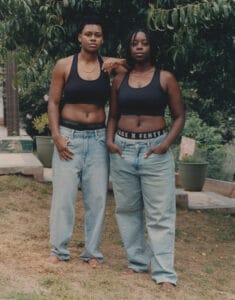
Her academic background in women and gender studies runs through the work, even when she is not naming it directly. She describes the subjects of her images as people whose experiences of womanhood are shaped both by how they understand themselves and how they’re perceived by others. She is also deliberate about what the work asks of the viewer. “An image should require something of you. It should challenge you. I’m almost okay with it being unexplainable, unrecognizable, and very subtle, because I would love if it made you uncomfortable.”
The most rewarding part of the process has been the community it opens. “I’m not the only person feeling this,” she says. “There’s a spectrum of how we exist, and we’re all experiencing it differently or the same, depending on the context.” The most demanding part is the editing. She often waits weeks before reviewing contact sheets from a shoot, returning with fresh eyes to assess not just individual images but how they function in sequence. “The individual image has to be strong, but it also has to work within the sequence.”
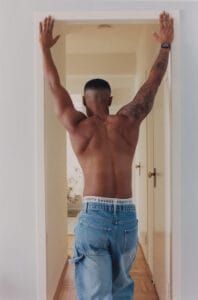
Rooted in care and sensitivity to what already exists in the frame, Ruhamaiah is building a body of work that returns to questions of perception and recognition, asking viewers to consider how womanhood is understood, experienced, and seen.
Meet more of the EMEI cohort in this spring/summer series every week and check them out here!
Powered by Gilead Sciences, GLAAD’s Equity in Media and Entertainment Initiative (EMEI) directly supports Black LGBTQ creators, using the power of art and storytelling to dismantle HIV stigma and drive cultural change.