
This is not your mama’s A Different World.
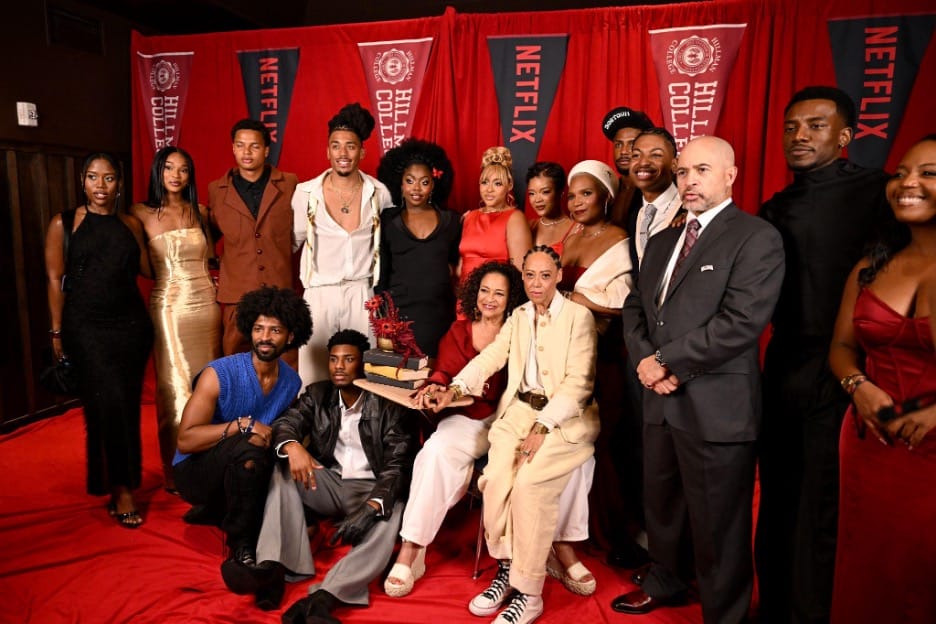
Thirty-five years after audiences fell in love with Dwayne Wayne (Kadeem Hardison) and Whitley Gilbert (Jasmine Guy) on the iconic series A Different World, new students have enrolled at Hillman College in the highly anticipated sequel premiering on September 24, 2026, on Netflix. Tony and Grammy award-winning actress Maleah Joi Moon (“Hell’s Kitchen”) leads the cast as Deborah Wayne, the privileged daughter of Dwayne and Whitley Wayne. But unlike the first run of the show, which debuted in 1987 and concluded in 1993, Black gay characters are intentionally woven into the storytelling on the fictional Hillman campus, mirroring the presence of LGBTQ people on 107 HBCU campuses across 19 states, D.C., and the Virgin Islands.
Out actor Jordan Aaron Hall steps into the role of Amir Rodale, an out gay student, sometimes barber, and trusted therapist among his peers. GLAAD spoke with Hall during the Atlanta premiere of A Different World on the campus of Morehouse College, one of three HBCUs inside the Atlanta University Center, and the chosen location for filming the new series. Hall will make history as the first out gay character to enroll at Hillman, an opportunity he says is a challenge and a responsibility.
“We need characters like us onscreen,” Hall said. “And young Black queer children need to be able to look up and to see somebody on TV that looks like them, that feels like them. And just in general, people know an uncle, an aunt, a cousin, a brother who is queer, and they deserve to be represented on television too.”
With Hall’s character now being the definitive exception, Black LGBTQ characters have essentially disappeared from scripted programming. In GLAAD’s latest Where We Are On TV report, which tracked the inclusion of LGBTQ characters from 2024-2025, of the 489 LGBTQ characters counted across all platforms, 85 (17%) were Black, a decline of 10 characters and two percentage points. In primetime scripted broadcast programming, 14 of the 53 LGBTQ characters (26%) were Black—a decrease of 2 characters but an increase of 1 percentage point from the previous year.
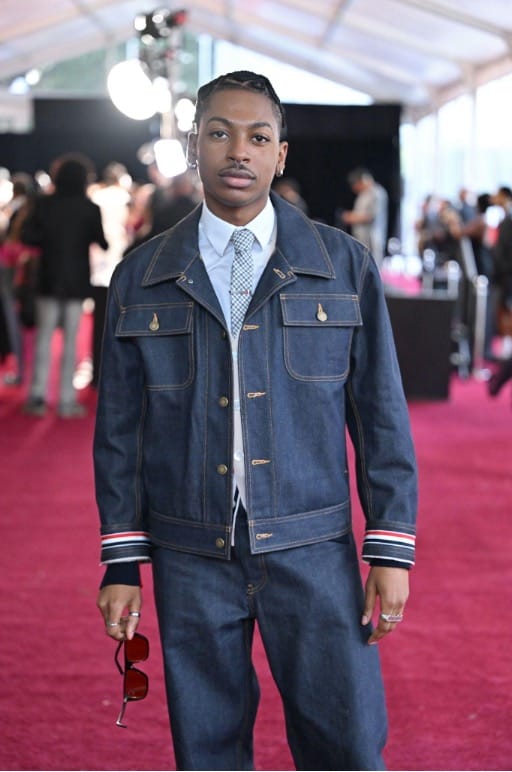
Felicia Pride, creator and showrunner of the latest iteration of A Different World, tells GLAAD it was a “no-brainer” to include gay characters.
“This is the world we live in,” Pride said. “That’s how I approach storytelling. It’s from a truth perspective. Queer people are all around us, and they need to be a part of our storytelling. So it was a no-brainer for us.”
“We have fully embodied queer characters on this show so that everybody can feel represented,” Joi Moon said. “And I feel like that is something that we kinda toss to the wind a lot. But there is safety, and there is preciousness in representing people, and I think that’s a huge pillar of our show.”
In the new iteration of the beloved show, not only does Hall’s character, Amir, get to exist, but he does so without apology or an official coming out; he shows up as his authentic self in a collegiate environment that embraces every facet of Blackness.
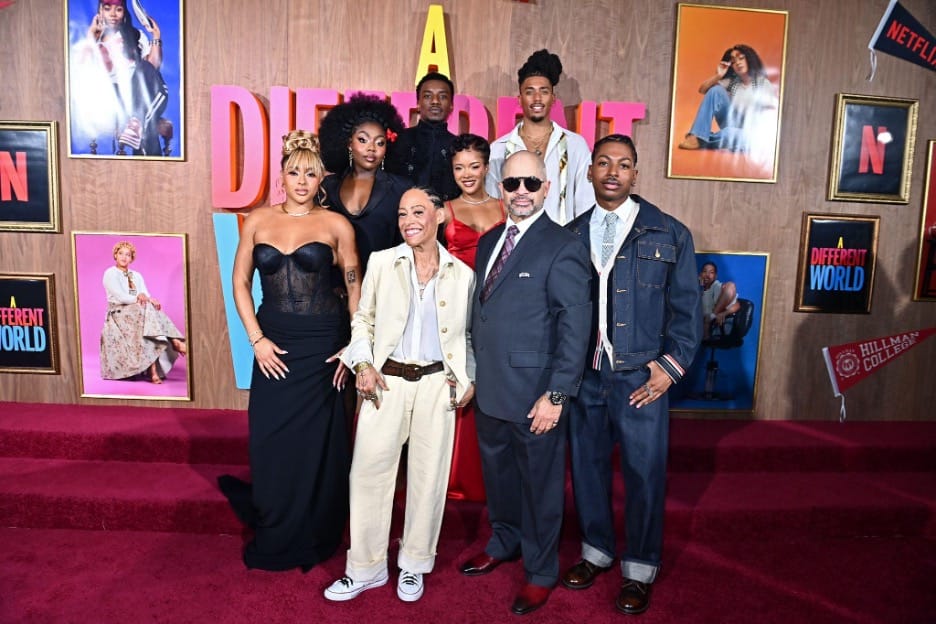
“I keep talking about this idea of normalization,” Hall said. “It is what [filmmaker] Ava Duvernay has talked about. We don’t need to tokenize this person’s experience. We can let them exist as they are, and that is the statement. I think Amir is a beautiful testament of that. Let’s let him be who he is. Let him discover who it is that he is, and that is it,” he said. “He needs to exist as he is and if they have a problem with it, then that’s on them.”
Hall and the show’s producers appear prepared for some pushback from viewers to the LGBTQ inclusion not in the original series, a time when LGBTQ people were even more absent on television. They’ve incorporated learning and accepting of those differences into the storyline.
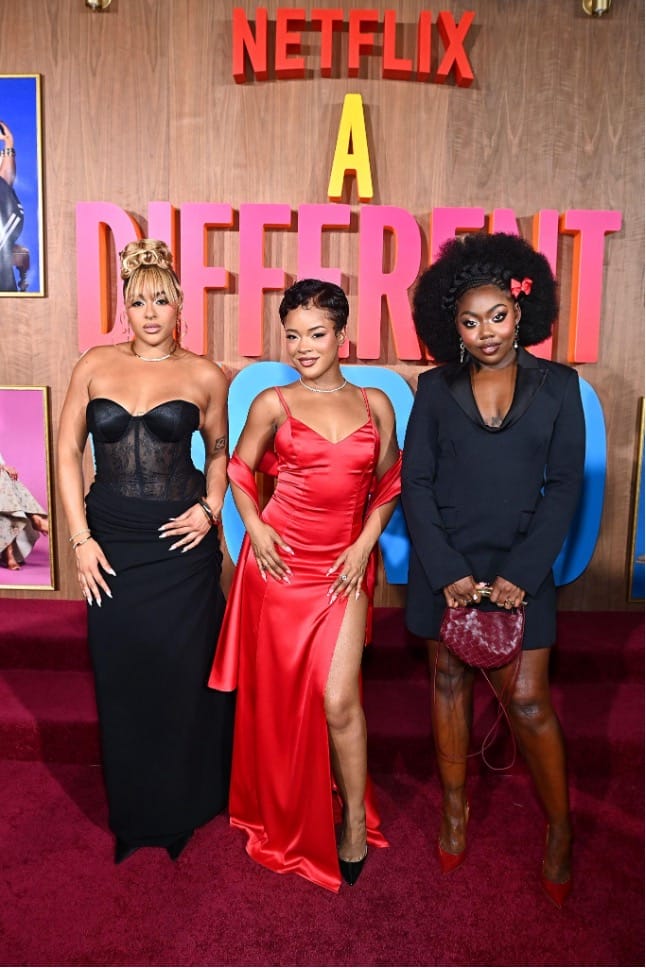
Actress and cast member Kennedi Reece plays devout Christian student Hazel Henry. Like director and actress Debbie Allen, Reece is a Howard University musical theater alum. Reece spent her senior year filming on the set of A Different World after landing an on-campus audition the year before, which Allen conducted. Reece tells GLAAD that Hazel and Amir’s friendship exemplifies what is possible.
“Is there gonna be some tension between the church girl and the gay guy? A lot of people tend to label Christianity as hateful, and it absolutely can be,” Reece said. “There are people out there who are very, very hateful towards the queer community. Coming to Hillman, I think she [Hazel] learned that there are so many different walks of life, and just because something is different doesn’t mean it’s wrong or untrue.”
To protect his mental health and spirit, Hall tells GLAAD that he doesn’t plan to read social media comments about his character.
“But if I do happen to, I think my thought is—young Black queer people exist, and they deserve to be represented,” Hall said. “And so we’re gonna take up space and will continue to. And if you have a problem with that, that’s on you. You can be a keyboard warrior at home, but we’re gonna keep thriving over here.”
A Formula for Success
The arrival of the sequel couldn’t come at a more crucial time, especially as Black male undergraduate enrollment has declined about 22% between 2010 and 2022, with HBCUs experiencing a steeper drop of 25%. Like the Maxine Shaw Effect, named after Maxine Shaw (Erika Alexander), the beloved attorney-at-law from Living Single, another iconic Black television show from the early 90s that inspired countless Black girls, young women, and men of all races to excel and pursue careers in law, politics, and leadership. A Different World also received significant credit for an increase in enrollment, rising by roughly 25% to 26% during the show’s first run (from about 223,000 to over 280,000 students).
It remains to be seen if the sequel will drive new enrollment at real-life HBCUs, or if the inclusion of gay characters in a show that previously had none will have a similar effect.
A minor spoiler alert is ahead. Hall’s character, Amir, is fully formed and multi-dimensional, with his love life depicted on-screen, and for the first time since the groundbreaking and short-lived series Noah’s Arc and Pose, Black and queer dating, romance, and love is explored. Amir’s love interest is also a Black queer man, a rare pairing in the media.
“This is a show about young Black people, so they have to be in relationships with other Black people,” Hall said. “It is important to show that kind of representation.”
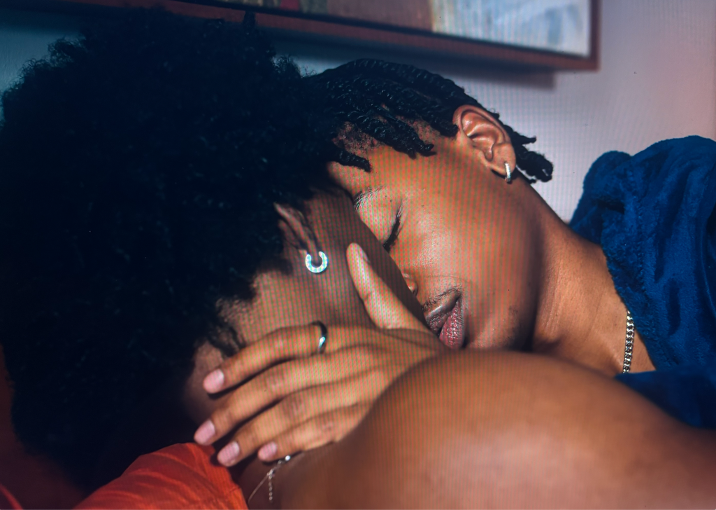
“It was important to us to show queer folks living amongst our people thriving, but also having their own challenges,” Pride said, before noting that in the development of Hall’s character, the show’s writers intentionally created a complex character who is forced to navigate challenges that are not necessarily attached to his sexuality.
A Different World is no stranger to incorporating hot-button issues impacting the Black community. One of its highest-rated episodes from the first run, “If I Should Die Before I Wake,” starred Tisha Campbell as a young student living with HIV and Whoopi Goldberg as her professor. Including a character living with HIV was an educational and culture-shifting moment during a time of rampant HIV/AIDS stigma and misinformation. The scene was recently recreated with updated language to reflect scientific advancements on GLAAD’s Generation Z & HIV HBCU Tour.
“People think that HIV is just a queer issue,” said actor Justin Ross on the red carpet. “No, it’s an everybody issue. People think that they have a pass because they’re not queer. Sometimes people are afraid. And if it’s normalized in the media that this is something cool and safe to do, I think it will be more normalized for people to be safe,” he added.
“I’m so proud of the writers and the showrunners of A Different World for trusting that it’s time for this.”